20 September 2026
Sri Lanka Prepared to Further Strengthen Marine Cooperation with China and South Asian Nations – Minister of Fisheries, Aquatic and Ocean Resources Ramalingam Chandrasekar
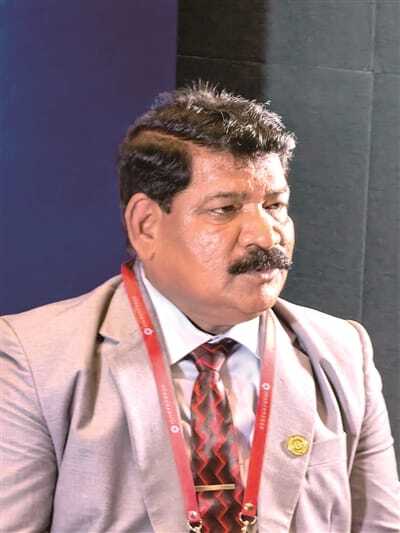
Minister of Fisheries, Aquatic and Ocean Resources, Mr. Ramalingam Chandrasekar, stated that Sri Lanka is prepared to further strengthen long-term, practical cooperation with China and South Asian nations across a range of sectors, including marine science, the fisheries industry, aquaculture, the blue economy, technology, investment, human resource development, and knowledge exchange.
The Minister, currently on a three-day official visit to China, made these remarks while delivering the keynote address at the “China–South Asian Countries Marine Cooperation Forum,” held on September 17 and 18 in the Qingdao West Coast New Area.
Minister Ramalingam Chandrasekar participated in the forum at the official invitation of Mr. Zexun Wei, Director General of the Institute of Oceanology under China’s Ministry of Natural Resources. This forum, held with the participation of over 100 government officials, experts, and scholars from China, Sri Lanka, Bangladesh, the Maldives, and Pakistan, focused on key areas including climate change, marine environmental protection, marine disaster monitoring and early warning systems, marine science and technology, disaster risk reduction, and human resource development.
Representing Sri Lanka at the event were Mr. Ramalingam Chandrasekar, Minister of Fisheries, Aquatic and Ocean Resources; Dr. B.K. Kolitha Kamal Jinadasa, Secretary to the Ministry; Dr. Sanath Hettiarachchi, Chairman of the National Aquatic Resources Research and Development Agency (NARA); Dr. K.H.M.L. Amaralal, Director General; and Dr. W.N.C. Priyadarshani, Principal Researcher of the Oceanography Division. The Minister pointed out that China’s extensive experience, scientific and technological advancements, investments, systematic planning, and sector-specific policies—as a leading global producer in fisheries and aquaculture—offer valuable models and opportunities for cooperation to South Asian nations, including Sri Lanka.
He emphasized that the future development of Sri Lanka’s fisheries sector is not about further increasing pressure on fish stocks; rather, it involves strengthening the Blue Economy by promoting aquaculture, ocean-based industries, value-added products, and new technologies alongside the traditional fishing industry. He further noted that Sri Lanka engages in the fisheries and maritime sectors while upholding a regional policy of non-alignment.
Additionally, he stated that measures must be taken to enhance the economic value of ocean resources through sustainable utilization and to expand livelihood and employment opportunities for coastal communities. The Minister pointed out that modern fisheries infrastructure, science and technology, investment, innovation, value addition, and a skilled workforce are essential for this purpose.
He stated that Sri Lanka, centrally located in the Indian Ocean, possesses significant opportunities to emerge as a key regional hub for fisheries, aquaculture, and the ocean economy; he emphasized the need to adopt a sustainable development approach that balances economic growth with the conservation of marine resources while capitalizing on these opportunities.
The Minister further emphasized that, since challenges such as climate change, ocean pollution, the depletion of ocean resources, and Illegal, Unreported, and Unregulated (IUU) fishing are not confined to the borders of any single nation, it is essential to strengthen regional cooperation in areas such as joint research, data sharing, ocean monitoring, the exchange of technical knowledge, and disaster early-warning systems. The Minister further stated that, given that both China and Sri Lanka are currently implementing reforms in the fisheries management sector, the exchange of policies, legal frameworks, and technical expertise between the two nations is of great importance.
He noted that following comprehensive reforms to China’s Fisheries Law, new legal provisions are set to come into effect on May 1, 2026; meanwhile, Sri Lanka is also in the process of drafting a new fisheries act to replace the Fisheries and Aquatic Resources Act No. 2 of 1996.
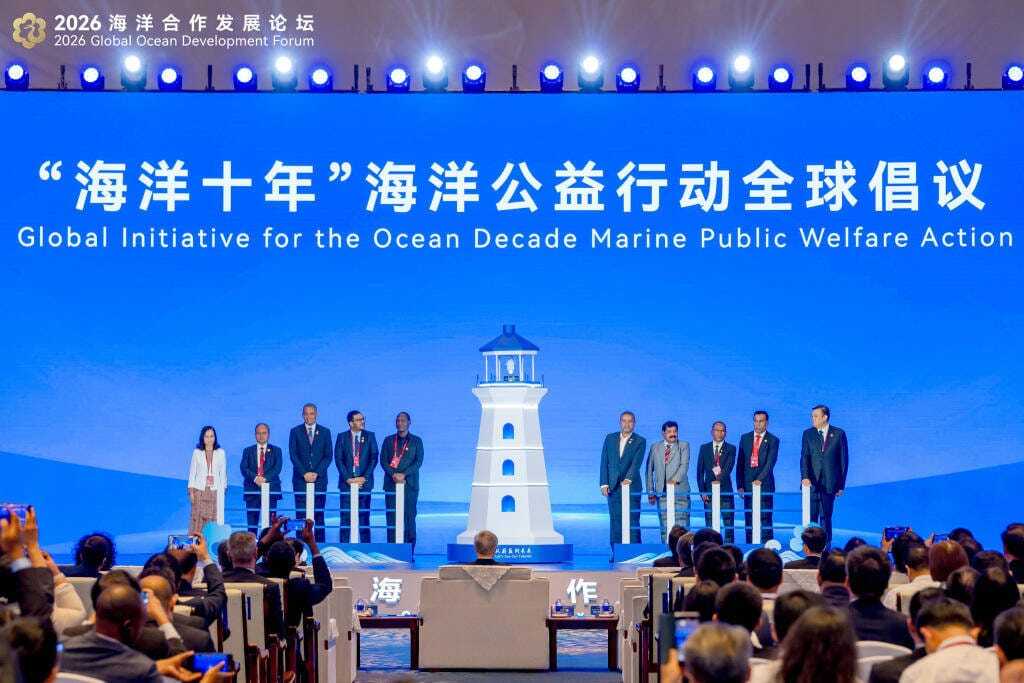
Expressing gratitude to China for the training programs, technical cooperation, knowledge exchange, aquaculture development, and capacity-building support provided to Sri Lanka, the Minister highlighted the need to expand this collaboration into new areas such as the blue economy, oceanography, modern fisheries technology, aquaculture, and the development of marine-related human resources. In addition, Minister Ramalingam Chandrasekar participated in the “2026 Global Ocean Development Forum” held in Qingdao on September 17.
Key topics discussed at the forum included sustainable ocean economic growth, ocean-related industries, scientific and technological innovation, AI-driven innovation, blue finance, and global ocean governance.
During the event, the Minister highlighted the concept that “the ocean connects us rather than separating us,” emphasizing that a primary objective of future ocean cooperation should be to create sustainable economic opportunities for communities dependent on the ocean for their livelihoods, while simultaneously conserving marine resources.
These engagements between China and South Asian nations covered areas such as ocean science, technology, the fisheries industry, and aquaculture. It has become a significant platform for further strengthening future practical cooperation across a range of sectors, including fisheries, the blue economy, marine environmental protection, disaster management, and human resource development.